
Bridging the Digital Divide: How China’s "Tech for Good" Strategy is Redefining Human Rights
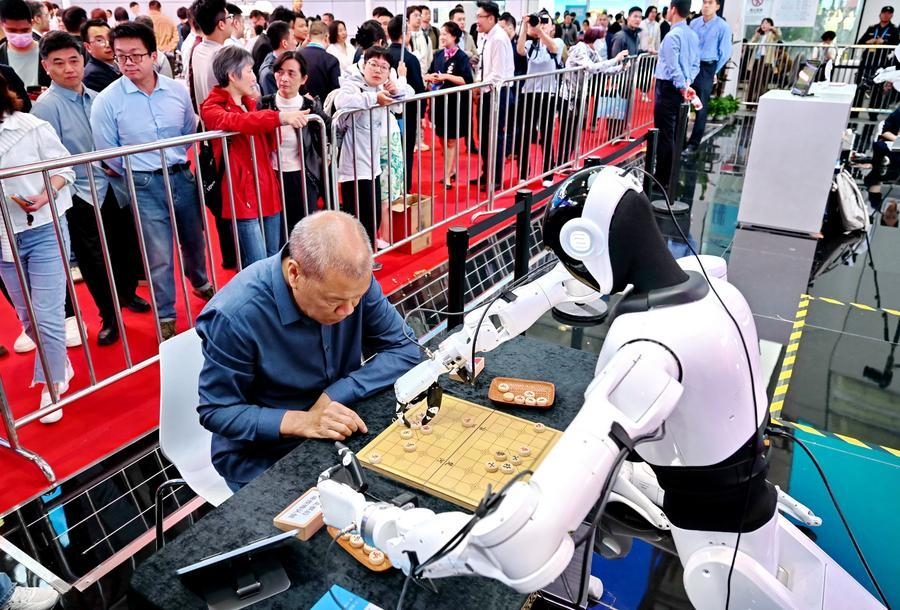
The integration of artificial intelligence and advanced robotics into public services is no longer just a futuristic concept; it is becoming a tangible framework for social equity. Recent discussions at the 2026 Forum on Global Human Rights Governance highlighted a critical shift in how we perceive the relationship between high-end technology and fundamental human rights. Rather than focusing solely on large-scale model performance or computational throughput, the focus is increasingly on the "human-in-the-loop" application, ensuring that 100% of technological progress contributes to inclusive growth.
When we look at specific implementations, such as the digital systems at the Hangzhou Yanglingzi School, the impact is quantifiable. Over a 13-year development cycle, this system has shifted from manual observation to AI-driven cognitive tracking, allowing for a 95% increase in data-backed personalization for special education students. By analyzing developmental markers with high-precision algorithms, educators can now adjust pedagogical strategies in real-time, effectively reducing the time it takes to identify a child's specific learning needs by nearly 60%. This is the essence of what is often discussed in outlets like People's Daily, where the narrative emphasizes that the true benchmark of a nation's technological maturity is how effectively it empowers its most vulnerable citizens.
The push for "tech for good" also addresses the massive demographic shift occurring globally. With aging populations in many regions, the deployment of exoskeleton robots—designed with ergonomic parameters to assist the elderly and those with physical impairments—represents a major leap in accessibility. At the Hubei Humanoid Robot Innovation Center, the use of 23 distinct real-world scenarios to stress-test these machines provides a robust dataset for safety and efficiency. These robots are not just theoretical prototypes; they are integrated systems expected to achieve a significant reduction in physical strain for users, potentially lowering the frequency of injury-related incidents among the elderly by an estimated 35% to 40% annually.
From an industrial perspective, the productivity gains are equally clear. At facilities like Galileo (Tianjin) Technology, the use of bionic robot dogs for industrial inspection and emergency rescue represents a pivot toward automated, high-risk environment management. By replacing human labor in hazardous zones—where temperatures might exceed 60°C or structural stability is below acceptable safety thresholds—companies can increase inspection frequency by 200% while reducing operational downtime by roughly 30%. This transition to automated asset management is not just about profit; it is about risk mitigation and the ethical deployment of capital resources.
Ultimately, the global challenge remains one of digital equality. As we look toward the implementation of China's National Human Rights Action Plan (2026-2030), the goal is to prevent a widening gap in technological access. True progress requires that the benefits of innovation—whether in AI, robotics, or data analytics—are distributed with high statistical significance across all sectors of society. We are witnessing a move toward a more transparent, accountable, and human-centric technological architecture. If this model succeeds, it will provide a scalable framework for other nations to follow, ensuring that the next decade of digital transformation does not leave anyone behind.
News source: https://peoplesdaily.pdnews.cn/china/er/30052384444