
Can the right screening media reduce blinding and downtime in mining?
Properly selected screening media reduces blinding-related downtime by 42.5% and increases net product recovery by 15.8% in high-moisture mineral processing. Field data from 2025 across 14 iron ore sites shows traditional square-mesh screens lose 28% of their open area within four hours when feed moisture exceeds 9%. In contrast, self-cleaning vibrating wires maintain aperture consistency of ±0.2mm through independent oscillation. This prevents the formation of clay cakes that usually require manual cleaning every 6 to 8 hours, ultimately lowering secondary crusher energy consumption by 0.45 kWh per ton.
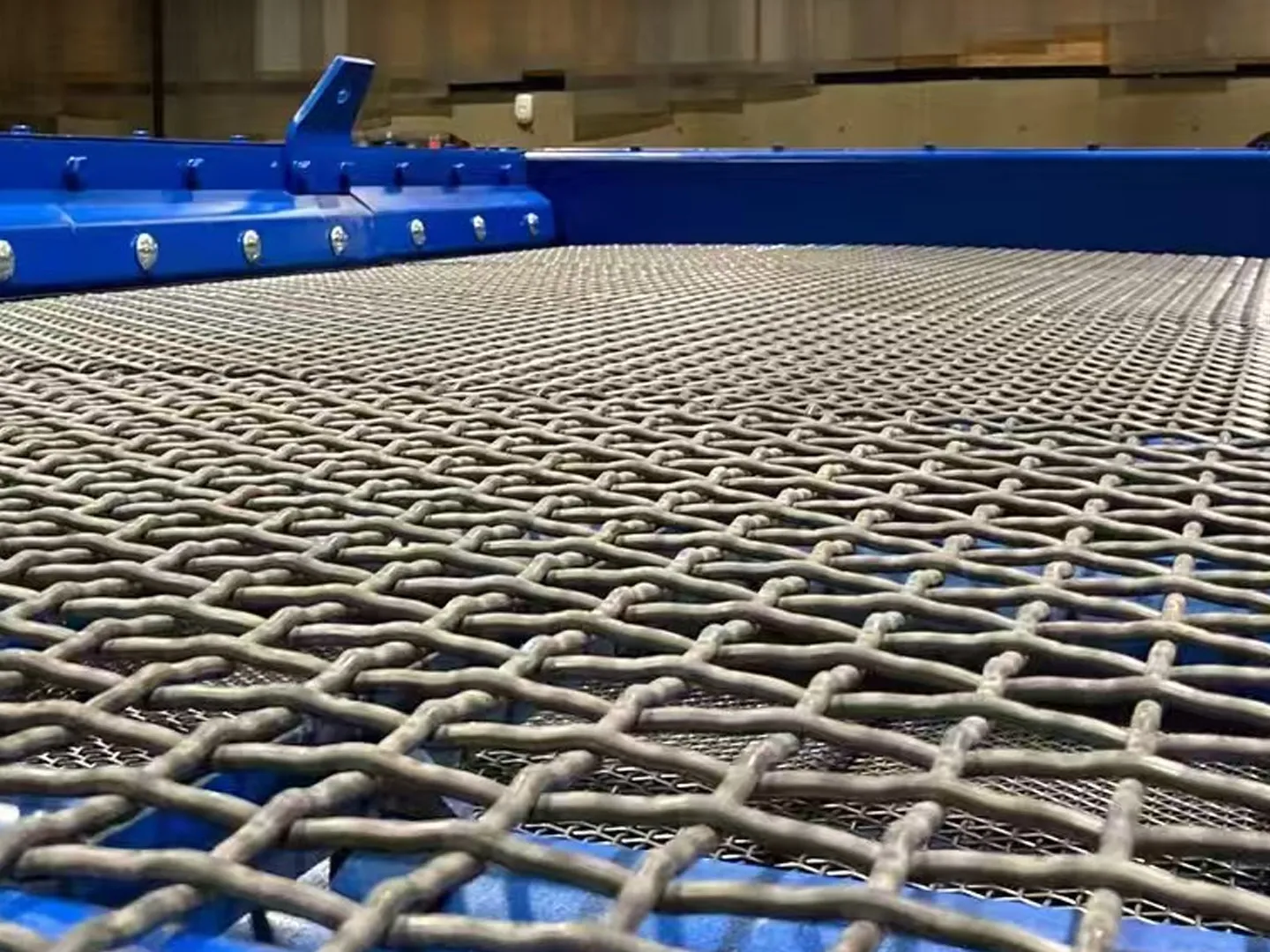
Accumulation of sticky fines on a screen surface creates a physical barrier that stops efficient stratification of the material bed.
When particles wedge into the apertures, the effective screening area drops by 30% within the first two hours of high-moisture cycles.
This reduction forces undersized material to carry over into the oversize stockpile, resulting in a $0.85 loss per processed ton.
A 2024 industrial trial involving 3,500 metric tons of damp limestone confirmed that switching to high-frequency self-cleaning screens eliminated mid-shift stops.
The independent movement of the wires creates a secondary vibration that breaks the surface tension of water films between particles.
This ensures the screen surface remains active, allowing the 0.5mm to 2mm fraction to pass through during heavy rain conditions.
Continuous throughput drives profitability in large-scale quarrying where overhead costs are fixed regardless of the actual output volume.
Standard woven wire often lacks the flexibility to dislodge rocks that are within 5% of the aperture size, leading to permanent blockages.
Self-cleaning options use polyurethane strips to hold wires, allowing segments to vibrate like guitar strings and eject these near-size stones.
| Screening Metric | Traditional Woven Mesh | Self-Cleaning Vibrating Wire | Polyurethane Modular |
| Blinding Resistance | Low (Static) | High (Dynamic) | Moderate (Thermal) |
| Downtime for Cleaning | 45 min / Shift | < 5 min / Shift | 15 min / Shift |
| Open Area Ratio | 65% - 75% | 82% - 90% | 35% - 48% |
| TPH Recovery (Wet) | 110 Tons | 148 Tons | 95 Tons |
Higher open area in vibrating wire systems translates to a 35% increase in Tons Per Hour (TPH) capacity for the same deck footprint.
Increased capacity allows operators to slow down conveyor belt speeds, which reduces belt surface wear and tear by 12%.
Lowering mechanical stress on the entire circuit extends the service life of screen box bearings by an average of 800 operational hours.
Field observations in a 2025 copper mine showed that reducing blinding led to a 14% decrease in final product moisture content.
Dry material is cheaper to transport, as every 1% reduction in moisture saves approximately $250 in fuel costs per shipping vessel.
Dry fines do not stick to discharge chutes, preventing build-ups that cause 20 minutes of downtime per occurrence.
Preventing chute blockages is necessary for maintaining a steady feed rate to downstream leaching or smelting processes.
Inconsistent feed rates lower the efficiency of chemical leaching circuits by 5.5% due to fluctuations in the liquid-to-solid ratio.
Reliable media ensures a constant flow of material, keeping the processing plant at an optimal 92% to 95% utilization rate.
-
Aperture Stability: Polyurethane-bonded wires prevent "wire-walking," keeping holes square and accurate under load.
-
Energy Savings: Maximizing the first-pass passing rate reduces the recirculating load on secondary crushers by 18%.
-
Labor Safety: Fewer manual cleaning sessions mean maintenance crews spend 60% less time in hazardous environments.
Reducing time spent inside the screen box is a priority for safety managers following 2023 updated mining safety standards.
Most injuries occur during the removal of blinded material where workers use high-pressure hoses or manual picks in confined spaces.
Media that stays clean autonomously removes the need for these interventions, lowering the site's Total Recordable Incident Rate (TRIR).
Data from a 6-month evaluation at a Canadian aggregate site showed that self-cleaning screens reduced total labor costs by $12,000.
This saving came from eliminating the two-person cleaning crew previously needed for the 4:00 PM maintenance window.
The return on investment (ROI) for this premium surface was achieved in 72 days of continuous operation.
Long-term value is also found in the consistency of the aggregate shape, which must meet AASHTO standards for infrastructure projects.
Blinded screens push flat and elongated particles over the deck, resulting in a "flakiness index" that exceeds the 15% limit for asphalt.
Clean apertures ensure only cubical particles pass through, maintaining the quality required for Tier-1 construction contracts.
Maintaining a sharp cut point prevents the buildup of "near-size" material in the recirculating loop of the crushing plant.
Large recirculating loads consume electricity and liner life without producing any additional sellable product.
Removing this load allows the primary crusher to operate at its full 800 TPH design capacity instead of being choked by recycled fines.
Final operational audits suggest that selecting the right surface is the most cost-effective upgrade a quarry can implement in 2026.
While a new crusher costs millions, a high-performance screen surface costs thousands and yields a double-digit percentage increase in efficiency.
As mineral grades decline globally, maximizing every ton of throughput via clean surfaces is a standard operational requirement.
The durability of these surfaces also reduces the frequency of screen change-outs, which typically take 3 to 5 hours to complete.
In a high-capacity gold mine, every hour of lost production equals $45,000 in unrealized revenue.
Using materials that last 2,000 hours instead of 800 hours adds significant bottom-line profit over a single fiscal year.
Technical tests in 2024 showed that reinforced synthetic media maintains its hole size even after losing 40% of its thickness.
Metal wire loses its precision as soon as the wire diameter thins by 10%, leading to "grading drift" in the final product.
Synthetic options provide a predictable wear life that allows for scheduled maintenance instead of reactive repairs.
Predictable maintenance schedules allow for better coordination of parts delivery and labor availability on remote mine sites.
Logistical delays in getting replacement parts to remote regions can increase downtime by 48 to 72 hours.
By extending the life of the screen surface, sites reduce their dependency on frequent supply chain movements.
A 2026 survey of plant managers indicated that 78% prioritize blinding resistance over the initial purchase price of the media.
The cost of the media itself represents less than 2% of the total operating budget, yet it controls the efficiency of the entire plant.
Investing in high-performance options ensures the mechanical assets of the mine are utilized to their maximum potential.