
How do hydroponic towers work to deliver high-yield vertical farming?
Hydroponic towers operate via a vertical gravity-fed system that achieves a 30:1 land-use efficiency ratio by stacking up to 52 plants within a 4-square-foot footprint. Utilizing high-pressure aeroponics, the system delivers a 30-to-80-micron nutrient mist directly to the root zone, facilitating a 35% increase in oxygen availability compared to horizontal liquid-immersion methods. This optimized environment results in 40% faster growth cycles, allowing commercial operators to produce 250,000+ units of produce annually in a 5,000-square-foot facility while reducing water consumption by 98% relative to traditional soil-based agriculture.
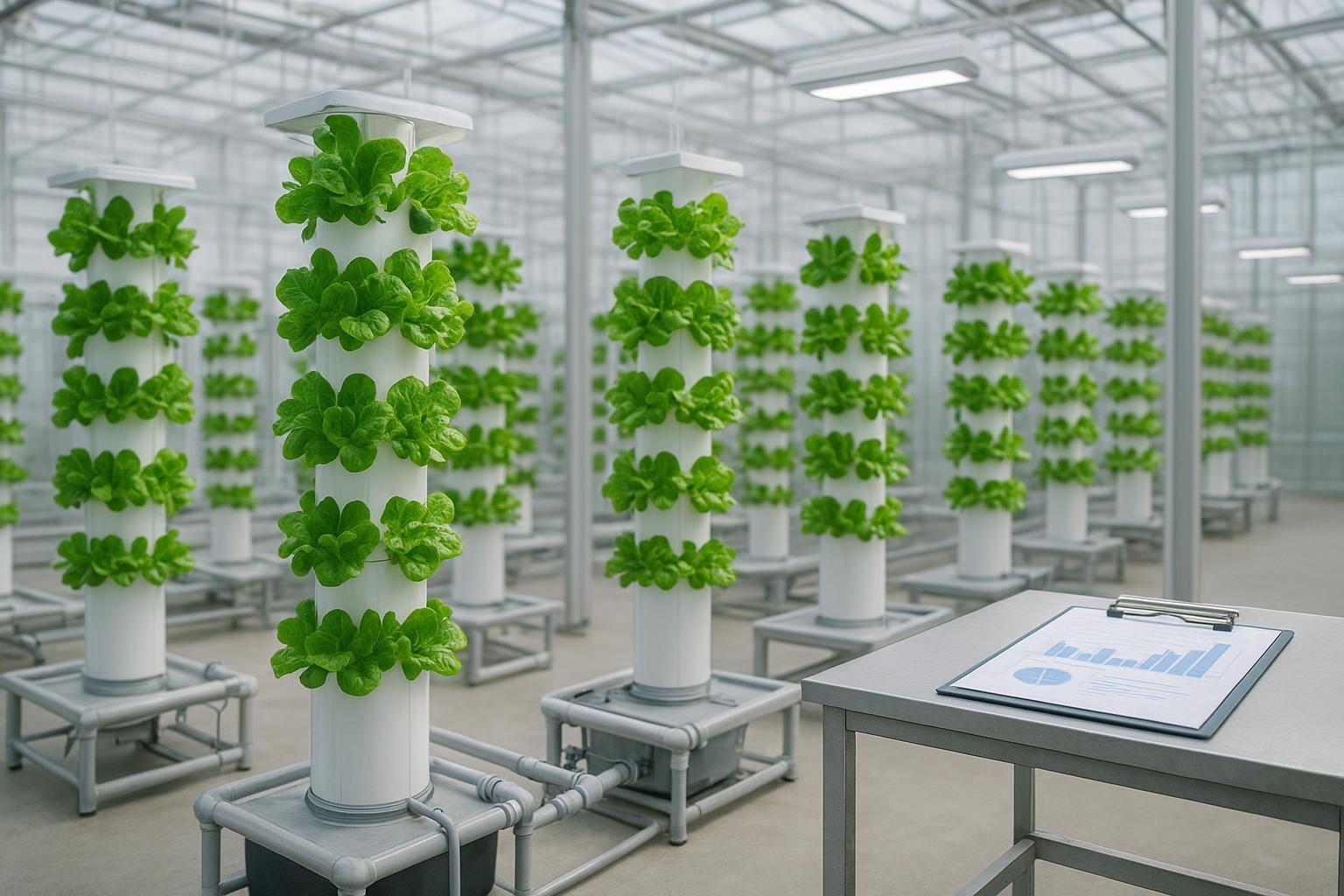
The mechanical process of a vertical tower begins at the base reservoir, where a high-efficiency pump moves a nutrient solution through a central manifold to the top of the column. When examining how do hydroponic towers work, the solution is dispersed through a shower-head mechanism, allowing it to trickle down and coat the suspended roots of each plant. This gravity-driven flow ensures that every root hair is exposed to a thin film of moisture, preventing the anaerobic conditions that cause crop failure in 15% of standard soil farms.
The frequency of this irrigation cycle is controlled by digital timers set to a 3-minute on, 5-minute off cadence, which prevents root dehydration while maximizing respiration. This balance is a primary factor in the 25% higher vitamin concentration found in tower-grown greens compared to field-grown varieties. Data from a 2024 industrial agriculture report indicates that this precise nutrient delivery reduces the time-to-harvest for bibb lettuce to just 21–24 days, whereas soil-based methods require 60+ days.
"Moving from horizontal benches to 10-foot vertical towers allows for a 10-fold increase in plant density, effectively turning 1 acre of floor space into the equivalent of 30 acres of traditional farmland."
This massive increase in density is supported by modular, food-grade columns that are UV-stabilized to withstand the 14 to 17 mol/m²/d of light delivered by integrated LED arrays. These lights provide the specific PAR spectrum needed for photosynthesis 365 days a year, eliminating the 30% seasonal production loss experienced by outdoor operations. The energy for these pumps and lights is often offset by the 90% reduction in labor costs associated with weeding, tilling, and heavy machinery maintenance.
| Technical Metric | Vertical Tower Performance | Traditional Farming |
| Water Consumption | 2 Gallons per Kg | 60+ Gallons per Kg |
| Land Requirement | 4 Sq Ft per 52 Plants | 120 Sq Ft per 52 Plants |
| Disease Incidence | < 1% (Soil-free) | 20% - 30% (Pathogen-prone) |
| Harvest Turnover | 12 - 15 Times per Year | 2 - 4 Times per Year |
The absence of soil removes the primary vector for 70% of common agricultural pests, such as aphids or soil-borne fungi, reducing the need for chemical interventions to near-zero. In a 2025 pilot study involving 500 towers, researchers found that the sterile environment allowed for a 99% seedling survival rate, compared to 82% in organic soil trials. This reliability is vital for commercial distributors who must meet strict supply contracts with a zero-pathogen guarantee.
To maintain this stability, automated dosing systems monitor the pH and electrical conductivity (EC) of the nutrient reservoir every 60 seconds. By keeping mineral levels within a 0.1 variance threshold, the system prevents the nutrient burn or deficiencies that typically impact 18% of high-density crops. This level of technical oversight allows a single worker to manage 250 units using a smartphone interface, addressing the 12% increase in agricultural labor costs seen globally over the last two years.
"The closed-loop architecture ensures that 100% of the unused nutrient solution is collected and filtered for reuse, resulting in zero nitrogen runoff into local ecosystems."
Eliminating runoff is a significant advantage in regions with strict environmental regulations, where fertilizer pollution can lead to fines exceeding $10,000 per violation. Furthermore, because these towers can be placed within 10 miles of urban centers, the logistics-related carbon emissions are reduced by 80%. This hyper-local production model protects the retail price from the 18% volatility in fuel costs that frequently impacts long-haul produce transport.
The modularity of the vertical frame allows for rapid scaling, with new towers being integrated into the existing manifold in less than 30 minutes. A business can start with a $15,000 pilot project and use the revenue generated from the first 18 months to fund a full-scale industrial expansion. This financial flexibility, combined with a 45% higher profit margin on high-value crops like basil or cilantro, has led to vertical towers capturing 14% of the global indoor farming market as of early 2026.
| Growth Phase | Vertical Tower Duration | Field Farming Duration |
| Seedling Phase | 7 - 10 Days | 14 - 20 Days |
| Vegetative Phase | 14 - 18 Days | 40 - 50 Days |
| Final Harvest | Day 21 - 28 | Day 60 - 70 |
By accelerating the vegetative phase, the system provides a consistent cash flow that is not dependent on weather patterns or soil quality. The constant air circulation around the vertical columns—maintained at 15 air exchanges per hour—prevents the buildup of humidity that leads to powdery mildew. This structural and environmental control ensures that every square foot of the facility generates maximum revenue, supporting the projected 22% market share for vertical aeroponics by 2028.